What Does a Hydraulic Power Unit Do?
A hydraulic power unit (HPU) is a self-contained system that generates and controls pressurized hydraulic fluid to operate hydraulic actuators on industrial valves. A typical HPU combines a hydraulic pump, reservoir, motor, controls, and other necessary components into one complete system.
Why Do Industrial Valves Need an HPU?
The simplest method to operate a valve manually is by using a handwheel or lever. This becomes impractical on larger valves where greater force is required, or when automation or remote operation is needed. In these applications, valves are typically equipped with actuation systems that can be controlled remotely by an electrical or pneumatic signal, or locally using push-button controls.
There are three common methods of valve actuation, each with its own advantages and disadvantages. For example:
- Pneumatic cylinders can actuate many types of valves, but they become less practical as thrust or torque requirements increase. Higher force requirements mean larger actuators, which can limit their suitability for some applications.
- Electric actuators are common but may be limited by operating speed, fail open/close requirements, or applications where significant vibration is expected.
- Hydraulic cylinders are commonly used for demanding applications where fast stroke speeds, fail-open or fail-closed positioning, and high thrust or torque are required.
If an application requires high thrust, fast stroke speeds or fail-safe positioning, hydraulic valve actuation can provide significant advantages over pneumatic or electric actuation.
How Does a Hydraulic Power Unit Work?
While HPUs are available in many configurations for different applications, the basic method of operation remains the same. In all cases, oil is stored in a reservoir, pressurized by a motor-driven pump, directed to the valve’s cylinder, and returned to the oil reservoir.
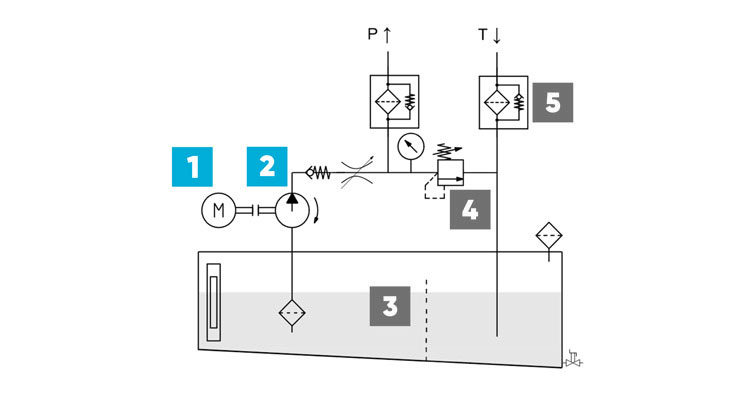
A motor (1) drives a hydraulic pump (2) to create flow and pressure. In permanent installations, a three-phase electric motor is generally specified to drive the hydraulic pump. Portable HPUs may use an electric motor or an internal combustion engine, such as gasoline or diesel.
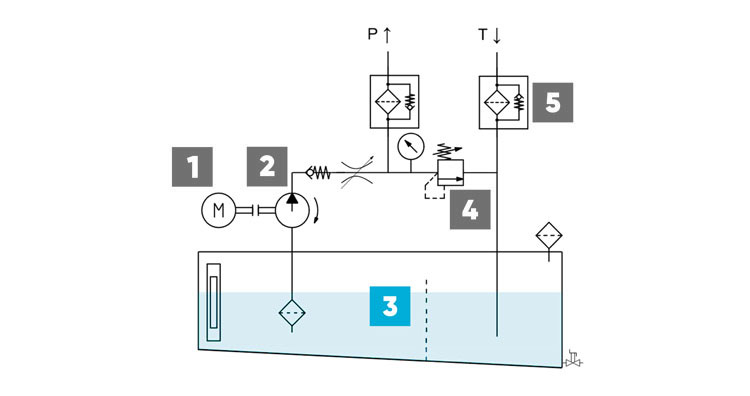
Oil is drawn from the hydraulic reservoir (3) and pressurized by the pump. There are generally two pump technologies used, a positive displacement pump (whereby one revolution of the pump yields a fixed volume of flow), and a variable displacement pump (volume of flow can be varied per revolution of the pump, while the pump is being operated).
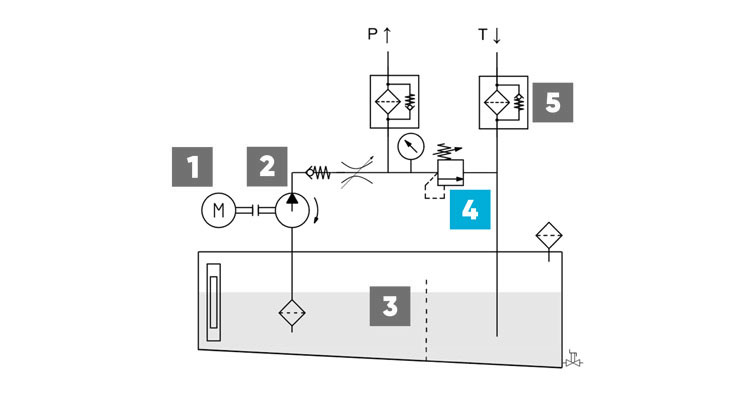
The overall oil flow rate and pressure of the HPU is limited by the horsepower of the driving motor. To ensure hydraulic oil pressure does not exceed the design limit set by actuator size, line selection or other factors, a hydraulic pressure relief valve (4) will relieve excess pressure and oil volume back to the hydraulic reservoir. A variable displacement pump compensator will stop pumping oil when the pressure reaches the compensator setting. The pressure relief valve serves as backup in this instance.
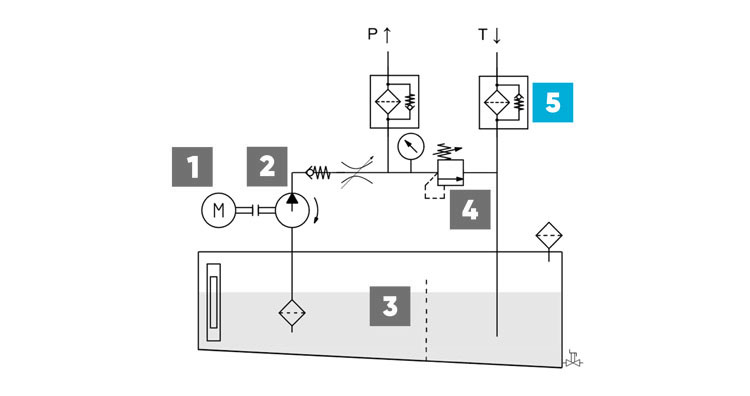
To actuate the valve, a hydraulic directional control valve will be operated (either by solenoid or manual lever) to divert pressurized oil to the valve’s actuator. As the actuator fills with pressurized oil, the piston moves and displaces hydraulic oil from the non-pressurized side of the actuator. The displaced oil is then pushed out of the actuator, back through the directional control valve, through a hydraulic oil filter (5), and then returned to the hydraulic reservoir.
How Hydraulic Reservoir Size Affects HPU Performance
In addition to storing and supplying the hydraulic pump with clean oil, the hydraulic reservoir acts as a buffer as the fluid level cycles up and down. The fluid level cycles as a result of the difference in oil volume required to complete a full open and closed stroke of the hydraulic cylinder.
A larger volume of oil is required to extend the cylinder (“A”) than to retract it (“B”). This is due to the volume displaced by the cylinder rod (“C”) which must be accounted for when sizing the tank.
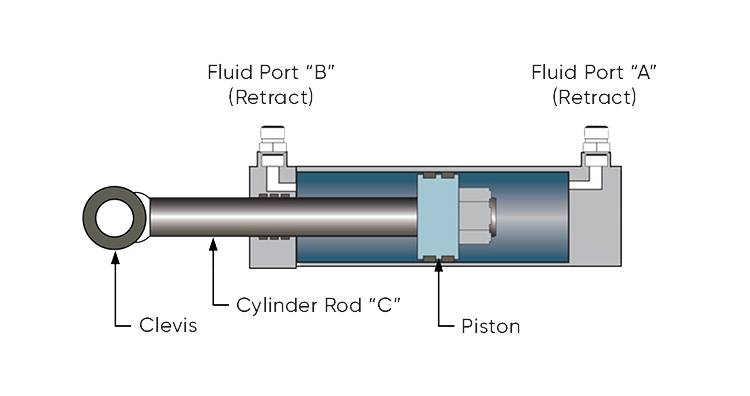
For example, an HPU operating 10 cylinders requires a larger reservoir than one operating a single cylinder. The reservoir must hold enough oil to maintain the minimum level required by the hydraulic pump, even when all cylinders are fully extended and the oil level is at its lowest.
Additionally, the hydraulic reservoir must be adequately sized to ensure it will not overflow when all the cylinders are fully retracted.
Types of Hydraulic Power Units - How to Choose the Right HPU for Your Application
Selecting the right HPU depends on factors such as the number and size of the valves being operated, required hydraulic pressure and flow, stroke speed, fail-safe requirements, available power source, installation location, and whether the system will be permanent or portable.
Learn more about additional HPU configurations. Type of HPU
Best For
Power Source
Typical Installation
Stationary
Permanent plant valve automation
Permanent electrical supply
Fixed
Portable Electric
Remote or infrequently operated valves
24 VDC / 120–240 VAC
Portable
Fuel Powered
Remote sites without electrical power
Diesel or Gasoline
Truck/trailer mounted
Stationary Hydraulic Power Units
When all typical environmental conditions are considered, stationary HPUs can be designed for indoor or outdoor applications intended for permanent or long-term installation. Stationary HPUs are connected to a permanent power supply, and are designed to operate multiple valves from a single HPU.
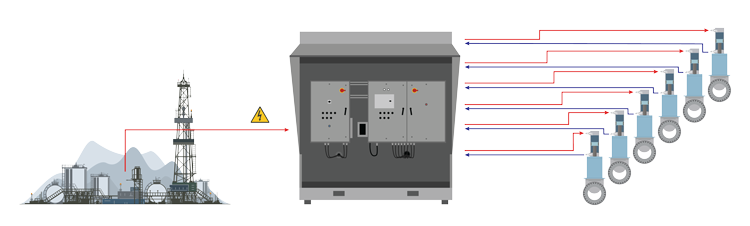
When configured to achieve specific process requirements, a stationary HPU can actuate multiple valves and provide specific fast, slow, or dual-speed operation. Additionally, the HPU can be equipped to achieve “Fail Open”, “Fail Closed” or “Fail Last Position” action in the event of signal or power loss.
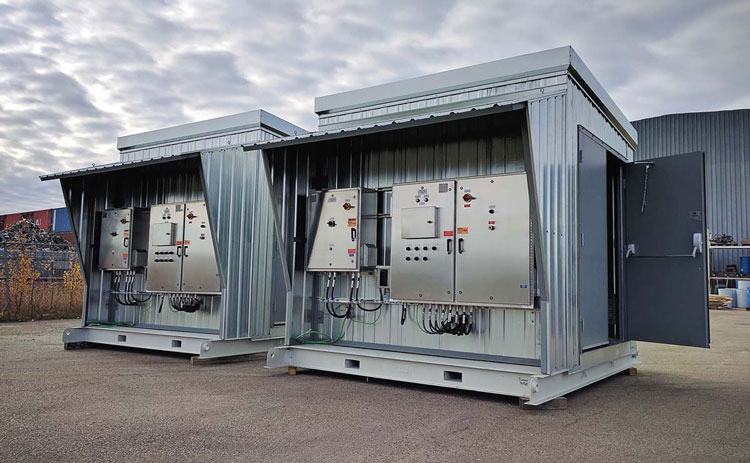
Systems such as the
PEAK HPU-ES use Programmable Logic Controller (PLC) based controls for design flexibility, and can be operated via local pushbuttons or an optional Human-Machine Interface (HMI) screen located on the HPU electrical panel. The HPU can also be equipped and configured for remote control and status indication via the plant Distributed Control System (DCS).
Portable Hydraulic Power Units
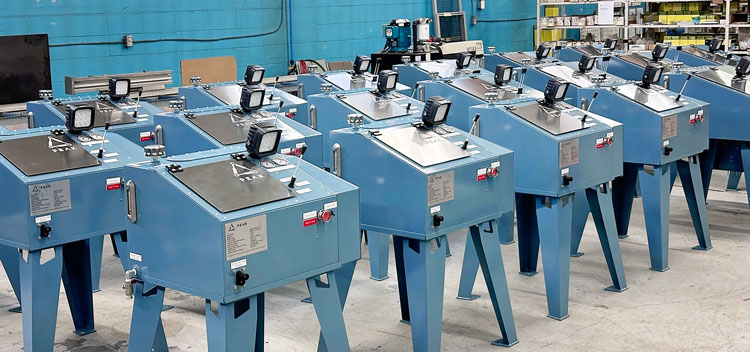
A portable electric hydraulic power unit is designed for year-round outdoor operation and can be mounted directly to, or positioned near the valve that it operates. Portable HPUs, such as the
PEAK HPU-EP requires an external, user supplied power source such as a mobile generator set (120/240 VAC), or mobile heavy equipment (with 24 VDC on-board power generation).
A battery booster-type power supply may be used for lighter duty operation, requiring charging between cycles. The power source will be transported to the HPU and connected to provide power for the HPU motor, controls and accessories. This configuration is operated locally via local pushbuttons or levers.
Fuel Powered Hydraulic Power Units
A portable engine-driven hydraulic power unit, such as the
PEAK HPU-FP is powered by an integral diesel or gasoline engine to generate the hydraulic pressure required to operate industrial valves. The HPU is designed for year-round outdoor operation and is intended to mount on the bed of a pickup truck or on a trailer. The HPU will be transported and connected to hydraulically actuated valves located in remote locations where permanent actuation is impractical.
This configuration is operated via local pushbuttons or levers. This type of HPU is frequently used in conjunction with a Hydraulic Distribution Manifold Rack to operate a group of valves located in specific area from a single HPU.

Custom Hydraulic Power Units for Industrial Valve Applications
PEAK Dynamic Systems designs and builds custom hydraulic power units in Edmonton, Alberta for industrial valve applications throughout Western Canada. Available options include fail-safe positioning, customized hydraulic distribution, faster stroke speeds, instrumentation, and advanced control systems.
Learn more about customizing your HPU. 

